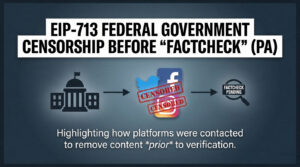
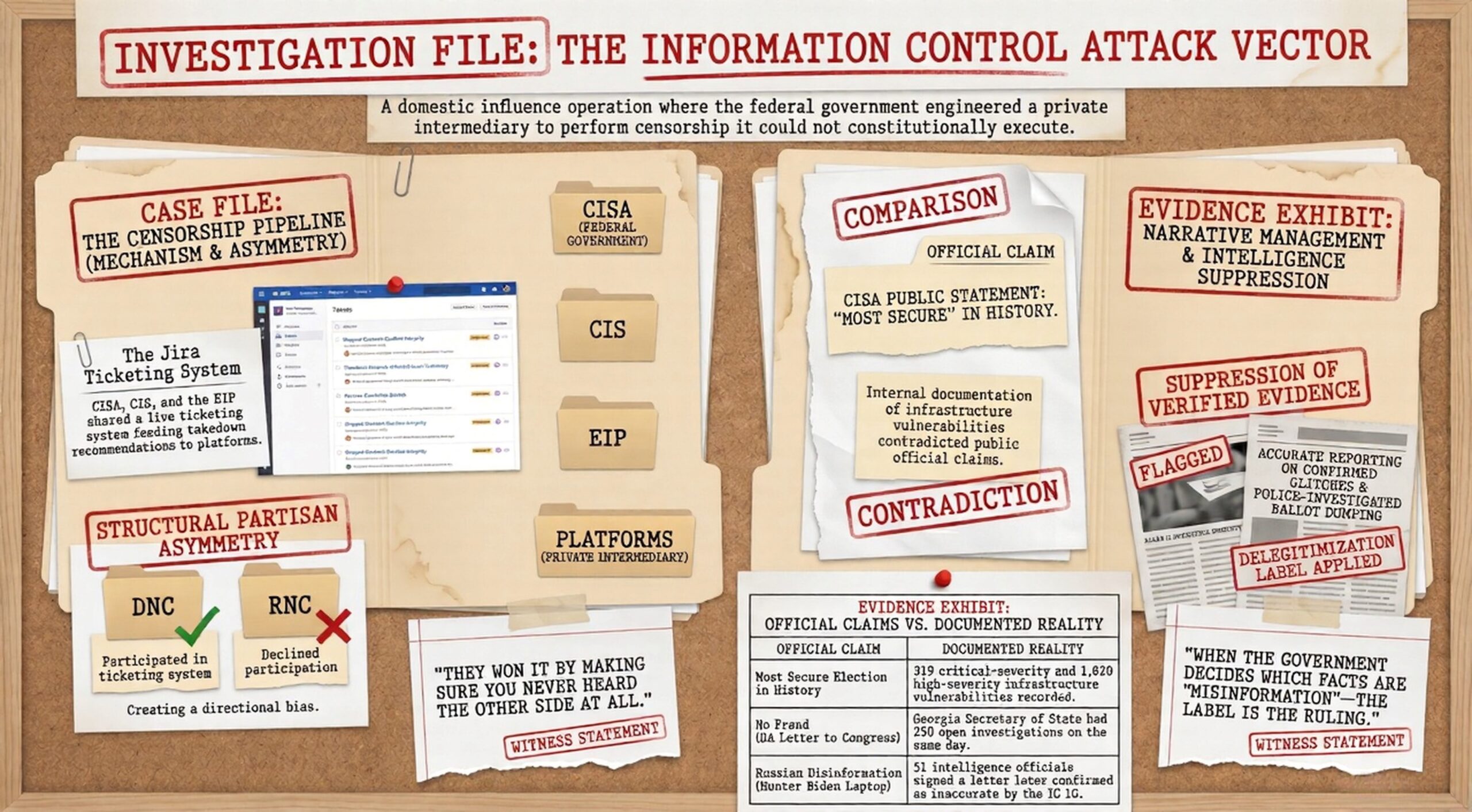
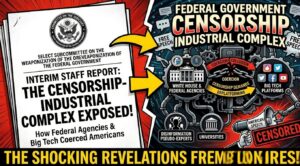
Beyond ballots and machines, the integrity of an election depends on whether citizens, courts, and legislators have access to accurate information about how the election was run, what irregularities occurred, and how officials responded. In 2020, information about election administration and alleged irregularities was filtered through an unprecedented constellation of government agencies, federally funded intermediaries, technology platforms, and media organizations, many of which explicitly sought to shape which narratives were visible and which were suppressed. When public and private actors collaboratively manage information flows in a way that systematically favors one side of an ongoing electoral dispute, the result is not merely biased messaging but a structural impairment of oversight, legal accountability, and public consent.
Topic Analysis
Information Control Findings
They didn't need to change a single vote. They needed the government agency that certifies the election to declare it secure while holding the classified vulnerability data that said otherwise. They needed a pipeline to remove the whistleblower's testimony before it spread. They needed credentialed officials to call the authenticated evidence Russian disinformation. They needed the terrorism framework aimed at anyone who kept asking. Every layer of oversight was covered — not by hiding the evidence, but by controlling who was allowed to discuss it.