Attack Vector 8: Seditious Conspiracy
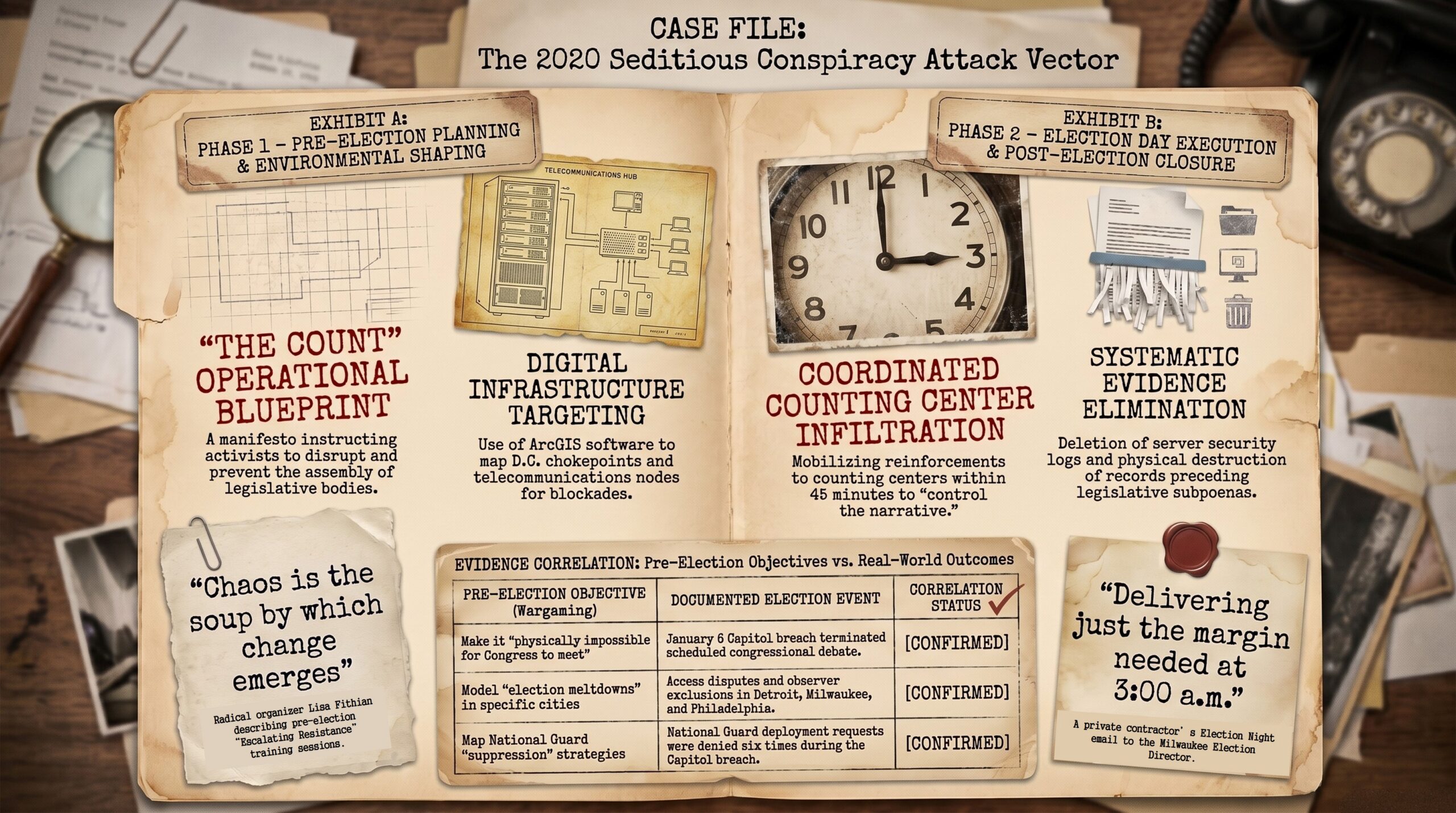
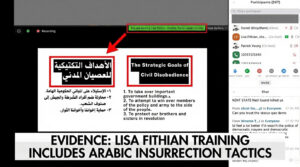
The evidentiary record reflects conduct that satisfies the core elements of seditious conspiracy under 18 U.S.C. § 2384. The civil unrest surrounding the 2020 election was not purely organic; rather, it was in material part the product of coordinated pre-election planning by interconnected networks of NGOs, labor unions, activist organizations, and sympathetic federal employees and contractors who war-gamed contested-election scenarios and positioned themselves to mobilize should President Trump challenge the results. Such conduct is directly probative of an agreement to “prevent, hinder, or delay the execution” of federal election laws — the operative standard under § 2384 — and substantial evidence indicates that those plans were in fact activated post-election under the stated justification of “protecting the results.”
In parallel, the January 6 Capitol breach and its aftermath have been systematically leveraged to construct and entrench a dominant “insurrection” narrative that omits material facts: documented pre-event intelligence and security failures, the varied composition and conduct of the crowd, and the facially disparate prosecutorial charging decisions applied to January 6 participants versus other instances of politically motivated unrest. The net legal and political effect of the January 6 events was the foreclosure of scheduled congressional debate over election-result challenges in multiple battleground states — precisely the outcome that the pre-election planning networks had modeled and prepared to achieve. That alignment between pre-event planning objectives and post-event outcomes is itself circumstantial evidence of coordinated intent and warrants further investigative scrutiny consistent with a seditious conspiracy theory of the case.