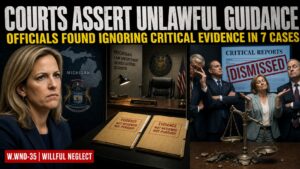
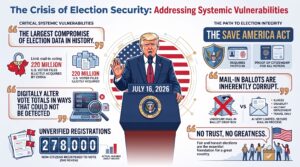
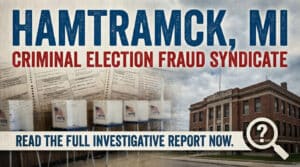
The findings in this section establish a pattern of conduct across multiple state and federal jurisdictions in which governmental authority was directed not toward neutral administration of election law, but toward shielding the 2020 election from independent scrutiny, suppressing lawful challenges, and retaliating against those who raised credible concerns. This was not isolated incompetence or bureaucratic delay — the evidence reflects coordinated, multi-channel obstruction: denial and destruction of election records in response to lawful FOIA and Right-to-Know requests, issuance of directives that exceeded statutory authority, deployment of prosecutorial resources against whistleblowers and election-integrity litigants, and the deliberate channeling of federal election-fraud complaints away from independent investigators.
At the federal level, documented conduct includes CISA’s integration into the Election Integrity Partnership to flag and suppress disfavored domestic election-related speech without statutory authority, DHS-FBI coordination with social media platforms to amplify government-preferred narratives, a DHS bulletin characterizing election-integrity concerns as potential terrorism threat drivers, and DOJ directives that constrained U.S. Attorneys from independently pursuing election-fraud allegations in pivotal battleground states. At the state level, attorneys general in Michigan and Pennsylvania publicly prejudged electoral outcomes, then became the very officials to whom federal fraud referrals were routed — creating a direct conflict of interest in the referral pipeline — while simultaneously pursuing sanctions, disbarment, and criminal investigations against the attorneys and citizens who submitted sworn testimony of irregularities.
Taken together, these actions satisfy the elements of deprivation of rights under color of law (18 U.S.C. §§ 241–242), interference by federal employees in elections (18 U.S.C. § 595), obstruction of official proceedings (18 U.S.C. § 1512), and destruction of federal election records (52 U.S.C. § 20701). The net effect was systemic: independent oversight mechanisms were neutralized, the evidentiary record was degraded before it could be assembled, and the legal and reputational costs of challenging the process were raised to a level that deterred participation — outcomes consistent not with coincidental administrative failure, but with intentional interference in the execution of federal election law.
This section organizes the obstruction findings into six domains: election oversight, obstruction, intimidation, willful neglect of duty, and malicious prosecution. Each domain captures a different way in which officials or aligned actors hindered the ability of challengers, clerks, legislators, investigators, or citizens to enforce existing law and obtain a transparent, auditable record.
Topic Analysis
Weaponization of Government Findings
The subpoenas were defied. The logs were cleared. The whistleblowers were interrogated. The auditors were threatened. The lawyers were indicted. The clerk who saved the server image was prosecuted. The officials who deleted the files were not. At every level, the power of government was not directed at the question of what happened — it was directed at the people asking it.