Disputed Fact
On August 19, 2024, Michigan Secretary of State Jocelyn Benson used Twitter to address various election-related assertions that she found on social media. One of the questions that she addressed was the following:
"Are plans in place in case some counties don't want to certify"
Joan Crawford's Eyebrows (@sanjose172)
Benson’s response?
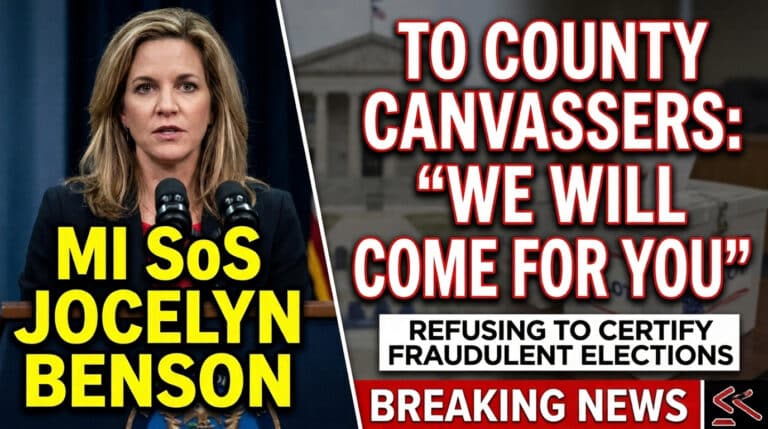
"Yes. If someone were to violate the law and not certify the election at the local level, we will come for you."
MI SoS Jocelyn Benson
See for yourself.
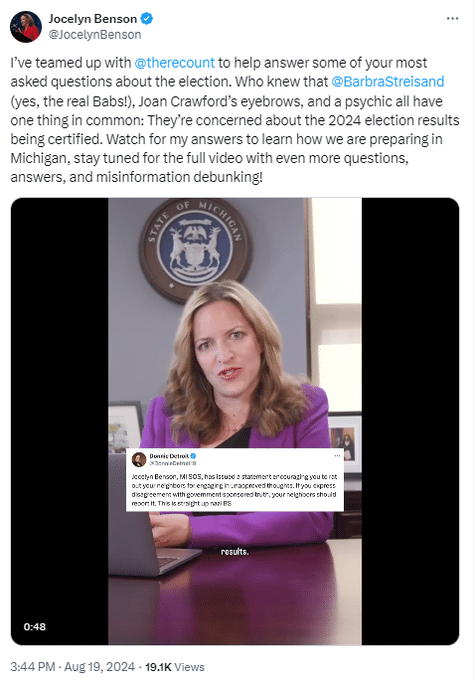
To many observers, this response may simply appear to be a playful reminder that canvassers need to follow the law. The only problem with that perspective, however, is that, at the time she said this, canvassers had the option of not certifying election results if they found that the election records were not in order. Democrats had taken steps to remove this discretion in law, but, at the time of Benson’s statement, these measures were not in effect.
Background
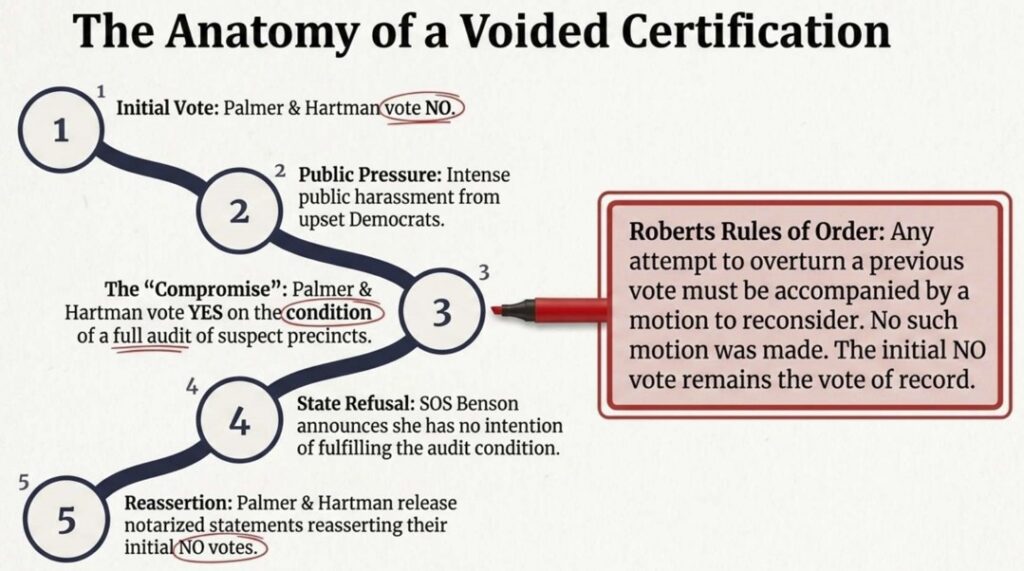
According to state law (MCL 168.822) in effect at the time of Benson’s statement, failure to certify election results triggers the transfer of election records to the state board of canvassers for investigation. County canvassers were not obligated to certify a potentially fraudulent election.
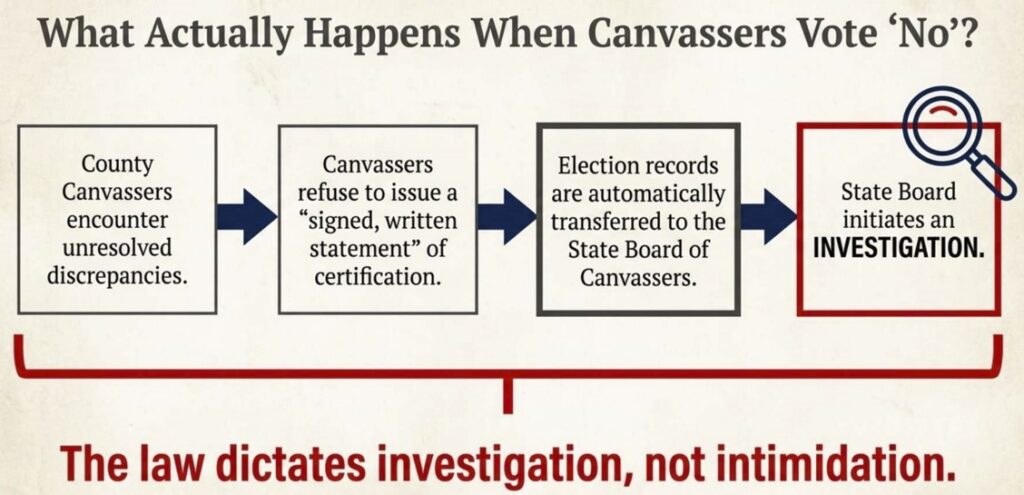
Democrats had pushed for modifications to MCL 168.822 that would obligate county canvassers to certify an election within 10 days if the presidential election is a close race. This law was not in effect at the time of Benson’s statement.
Intimidation of Election Officials
Under a new provision of Michigan election law that was in effect at the time of Benson’s statement (pushed ironically by Democrats), it is illegal to intimidate an election official.

So, it certainly appears that the chief election official in Michigan in the State of Michigan is culpable for 336 counts (4 canvassers per county, 83 counties, 4 state canvassers) of intimidating election officials as a result of her “we will come for you” threat to county canvassers.
What About Enforcement of Law by Michigan Attorney General Nessel?
To date, there have been no publicly disclosed legal actions against Benson for what certainly appears to be an attempt to intimidate county canvassers into certifying election results even if they had concerns about the legitimacy of the election returns.
In light of Nessel’s own remarks a couple of weeks before Benson’s remarks targeting county canvassers, this should come as no surprise.

It certainly appears that the new law passed by Democrats to penalize intimidation of election officials was not intended to apply to Democrats.
Conclusion
The finding concludes that Michigan canvassers were under no legal obligation to certify election results they believe to be fraudulent or inaccurate. State law in effect at the time of MI SoS Jocelyn Benson’s remarks provided a specific remedy for non-certification: an investigation by the State Board of Canvassers. The executive branch’s attempts to frame non-certification as a violation of the law are presented as a misrepresentation of the MCL, potentially crossing the threshold into illegal intimidation of election officials.