"Michigan counted 499,850 more ballots than voters. Pennsylvania counted 155,053 more. In Fulton County alone, 22,534 more ballots were counted than voters recorded. Each discrepancy independently exceeds its state's margin of victory."
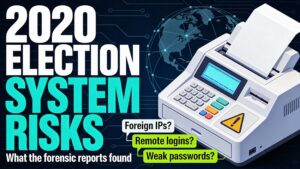
"319 classified-severity vulnerabilities. Suppressed for 22 months. Those machines are still certified. They will be used in 2026. The question is not whether they were vulnerable in 2020. The question is whether they are vulnerable today."
"Certification was not a checkpoint — it was a closing mechanism. In every decisive battleground state, officials certified results over missing records, statutory violations, mathematical impossibilities, and canvassers operating under duress. The last institutional brake on a defective election was never applied; it was bypassed, coerced, or falsified out of the way."
"They didn't need to rig the count. They needed the pre-election challenge to be too early, the post-election challenge to be too late, the discovery request to be denied, the forensic sample to be too small, the protocol order to never arrive, and the attorney who kept filing to lose her license. By the time the public was told the courts found no evidence, the courts had made certain they never would."
"A federally certified critical-infrastructure system is resilient only if its public so that its courts and its Congress can see and debate its actual performance. When the government classifies the vulnerability data, suppresses the opposition research, censors the witnesses, and designates the questioners as terrorism threats — it has not secured the election. It has secured the narrative."
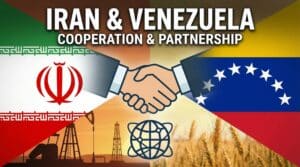
"Treasury OFAC has designated Cartel de los Soles as a Specially Designated Global Terrorist organization. If any dollar attributable to a designated foreign terrorist organization reached U.S. election infrastructure through the unverified online donation channels documented in this report, the legal exposure is not a campaign finance violation. It is material support for terrorism — up to life imprisonment."
"The voter saw a governmental election. The record shows a private organization deciding whom to hire, where to place the drop boxes, how to process the absentee ballots, who sat in the counting room on Election Night, and which records would later be available for inspection. The public paid for it. The public didn't run it. The public couldn't audit it. And the public still can't see the records."
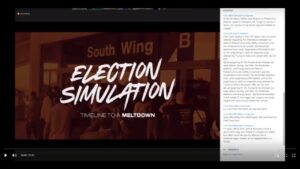
"They war-gamed a scenario in which Congress could not count the electoral votes. They pre-mapped the Capitol. They trained activists to block the National Guard. They excluded credentialed observers from the counting rooms. They destroyed the records afterward. And then they told the country the election was the most secure in history."
"The subpoenas were defied. The logs were cleared. The whistleblowers were interrogated. The auditors were threatened. The lawyers were indicted. The clerk who saved the server image was prosecuted. The officials who deleted the files were not. At every level, the power of government was not directed at the question of what happened — it was directed at the people asking it."
"The machines contained Chinese components. The data center ran on Huawei. The code was maintained in Serbia. The poll-worker files lived on a server in Beijing. The CIA analysts declined to report Chinese interference — in writing, on the record, for political reasons. By every measurable layer of the system, a foreign adversary had access. The only layer that didn't function was the one designed to detect it."