Patrick Colbeck

GBI Strategies – Organized Voter Registration Fraud; 8,000-10,000 Fraudulent Forms in Muskegon (MI)

Established Fact In October 2020, an operative employed by GBI Strategies, LLC, a nationally operating voter registration organization, delivered between 8,000 and 10,000 voter registration forms to the Muskegon, Michigan city clerk’s office. The forms exhibited hallmarks of organized fraud: identical handwriting across multiple applications, non-existent addresses, and fictitious phone numbers. Identical, coordinated spikes in […]

GBI Strategies – Organized Voter Registration Fraud; 8,000-10,000 Fraudulent Forms in Muskegon (MI) Read More »

211,958 Georgia Votes Attributed to Ineligible Addresses – Warehouses, Vacant Lots, UPS Stores (GA)

Disputed Fact Fractal quantum data analysis identified 211,958 Georgia voters in 2020 who were recorded as casting ballots from addresses that are legally ineligible as residences – including commercial warehouses, vacant lots, and UPS Store mailbox addresses. Georgia law, O.C.G.A. § 21-2-216, requires that a voter be registered at their actual residence. The ERIC system,

211,958 Georgia Votes Attributed to Ineligible Addresses – Warehouses, Vacant Lots, UPS Stores (GA) Read More »

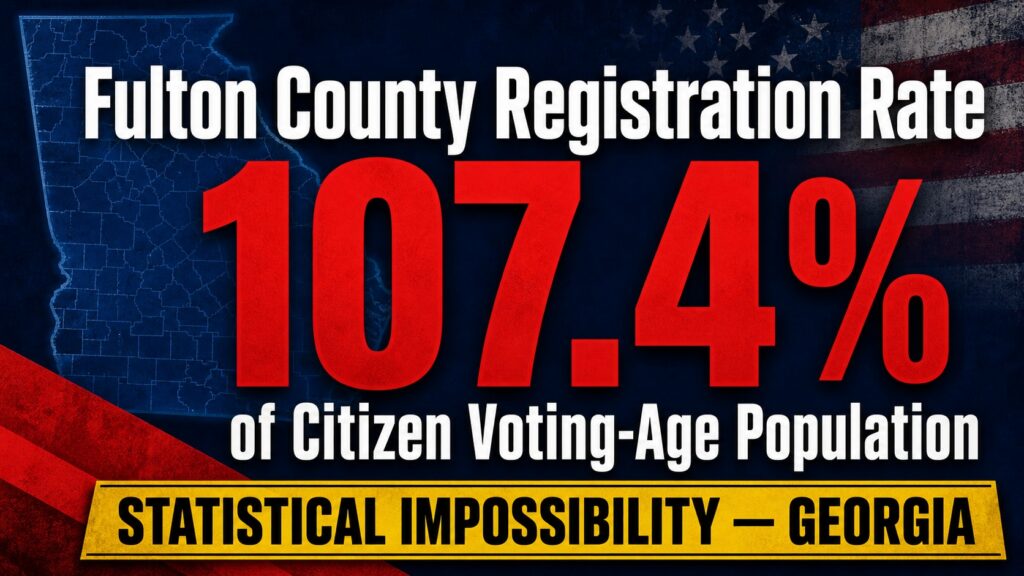
Fulton County Registration Rate of 107.4% of Citizen Voting-Age Population – Statistical Impossibility (GA)

Disputed Fact Fulton County, Georgia’s voter registration rate reached 107.4% relative to its citizen voting-age population (CVAP) – a mathematical impossibility that cannot be explained by any legitimate registration or demographic dynamic. A registration rate exceeding 100% of the eligible population provides per se evidence that the voter rolls contain registrations for individuals who either

Fulton County Registration Rate of 107.4% of Citizen Voting-Age Population – Statistical Impossibility (GA) Read More »

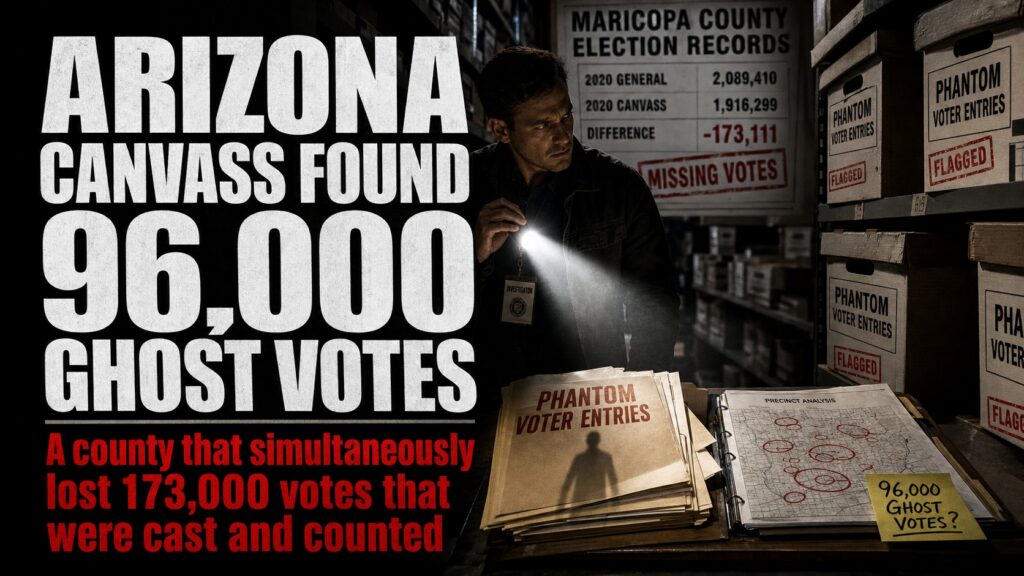
“Ghost Voting” – 96,389 Mail Ballots Attributed to Unknown or Relocated Persons; 173,000 Claimed Votes Unrecorded (AZ)

Reasonable Inference Canvassing analysis conducted post-election estimated that 96,389 mail-in votes were cast as “ghost votes” – attributed to individuals who were unknown to current residents at the listed address or who had moved prior to October 2020. In parallel, approximately 173,000 registered Maricopa County voters stated they had voted in the 2020 election, but

“Ghost Voting” – 96,389 Mail Ballots Attributed to Unknown or Relocated Persons; 173,000 Claimed Votes Unrecorded (AZ) Read More »

20-Year MVD Citizenship Verification System Failure – ~98,000 Unverified Registrants (AZ)

Established Fact A system defect in the Arizona Motor Vehicle Division’s automated voter registration interface allowed approximately 98,000 voter registrations to be processed and validated without requiring documentary proof of citizenship – the constitutional and statutory precondition for voter registration in Arizona. This defect persisted undetected for approximately 20 years. Arizona officials were aware of

20-Year MVD Citizenship Verification System Failure – ~98,000 Unverified Registrants (AZ) Read More »

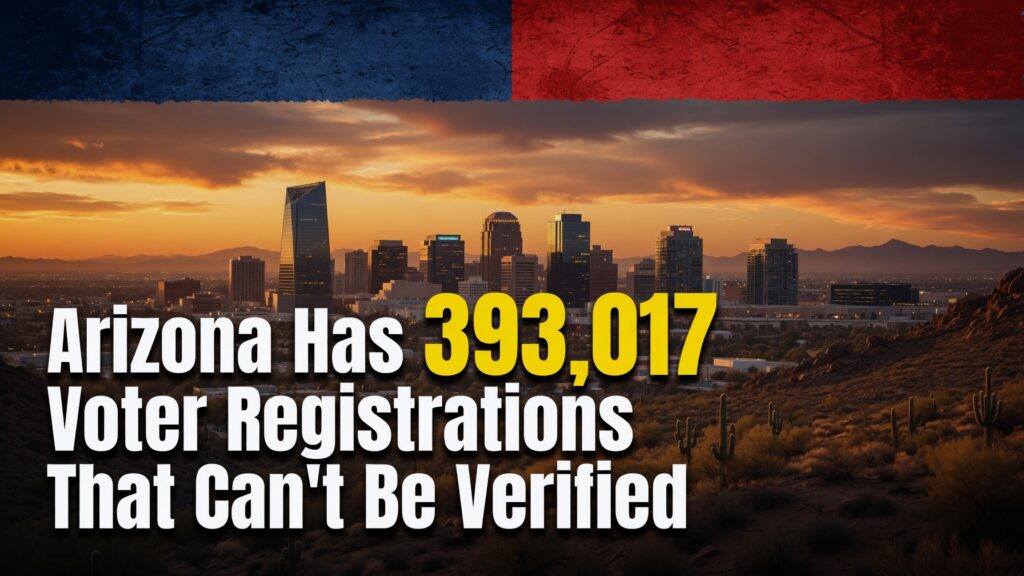
Systemic Failure to Verify Voter Identities – 393,017 Unverifiable Registrants (AZ)

Disputed Fact A study cross-referencing 673,560 registered Arizona voters against Arizona Motor Vehicle Division (MVD) driver’s license data and federal Social Security Administration records found that 58% – or 393,017 individuals – could not be positively identified as real human beings through either database. The methodology and verification standards underlying this study have not been

Systemic Failure to Verify Voter Identities – 393,017 Unverifiable Registrants (AZ) Read More »

Voter Tally Integrity Analysis

“In Arizona: 263,139 corrupt ballot images and 21,273 missing — tally unverifiable. In Georgia: 17,852 certified votes with no ballot image — confirmed by two professors. In Colorado: mid-election database creation changing adjudication counts by the hundreds. In Michigan: logs deleted, configurations set to 68,000 times the legal error rate. In every state, the digital

Voter Tally Integrity Analysis Read More »