United States

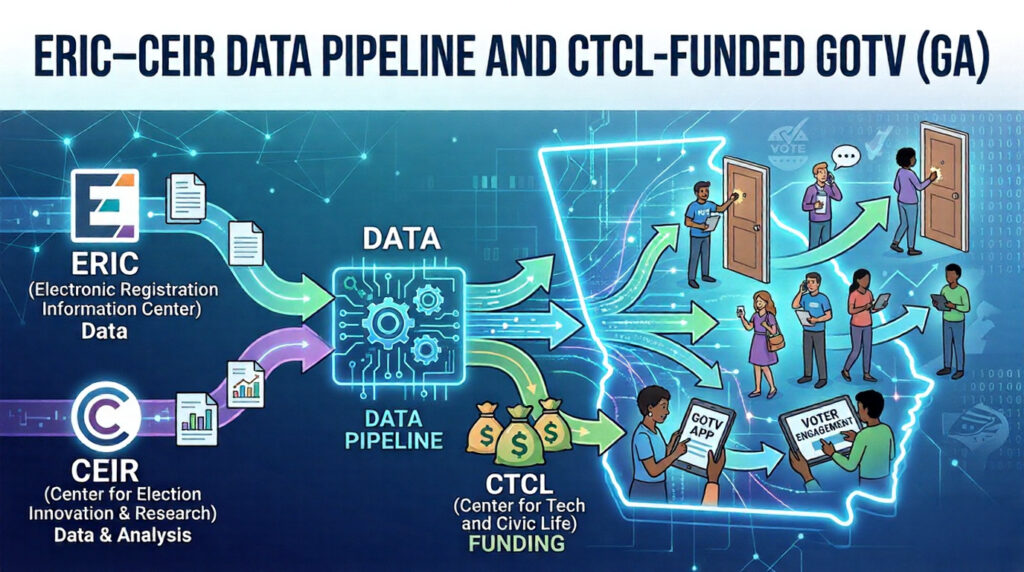
ERIC–CEIR Data Pipeline and CTCL‑Funded GOTV (GA)

Established Fact In Georgia, over 94% of CTCL funds — $42.4 million of a total $45 million — flowed to 17 counties won by Biden, while the remaining $2.6 million reached 26 Trump-won counties. Separately, Georgia’s membership in ERIC generated “Eligible but Unregistered” lists that were transmitted to CEIR — a $69.5 million Zuckerberg-funded nonprofit

ERIC–CEIR Data Pipeline and CTCL‑Funded GOTV (GA) Read More »
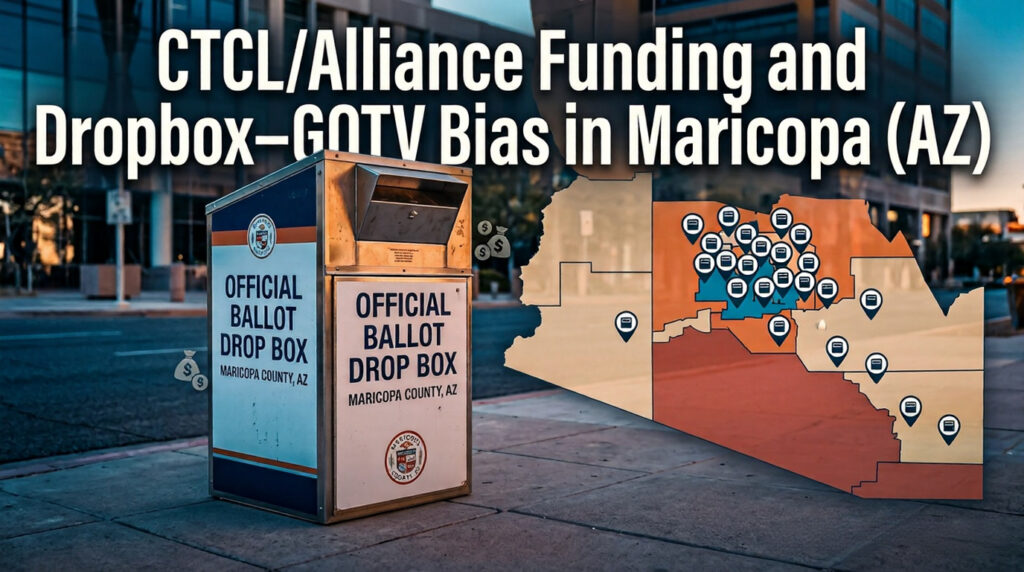
CTCL/Alliance Funding and Dropbox–GOTV Bias in Maricopa (AZ)

Established Fact Arizona jurisdictions, led by Maricopa County, accepted CTCL grants that were disproportionately concentrated in Democratic‑leaning areas, with funds used for drop‑box deployment, satellite offices, and targeted voter‑outreach infrastructure. These privately steered operational choices shifted the geographic pattern of convenient voting access in ways that aligned with one party’s base rather than neutral administrative

CTCL/Alliance Funding and Dropbox–GOTV Bias in Maricopa (AZ) Read More »

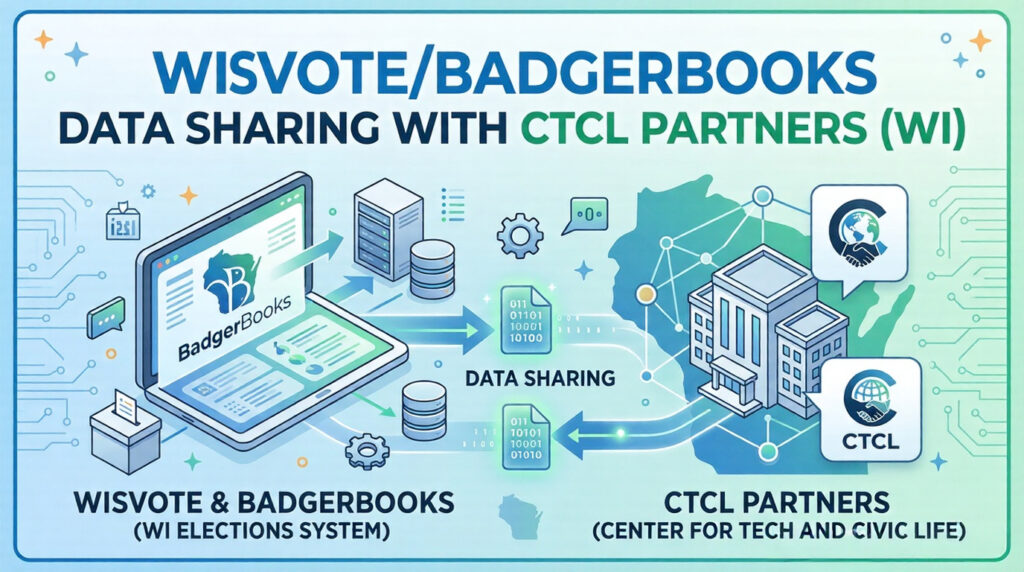
WisVote/BadgerBooks Data Sharing with CTCL Partners (WI)

Established Fact The Zuckerberg-5 cities shared WisVote voter-file data—available to the public only as periodic snapshots at $12,500 per copy—with CTCL-aligned private partners at no cost, in violation of Wisconsin Elections Commission security policies. In at least one city, officials apparently provided those partners with API access to WisVote and BadgerBooks, enabling real-time, free data

WisVote/BadgerBooks Data Sharing with CTCL Partners (WI) Read More »

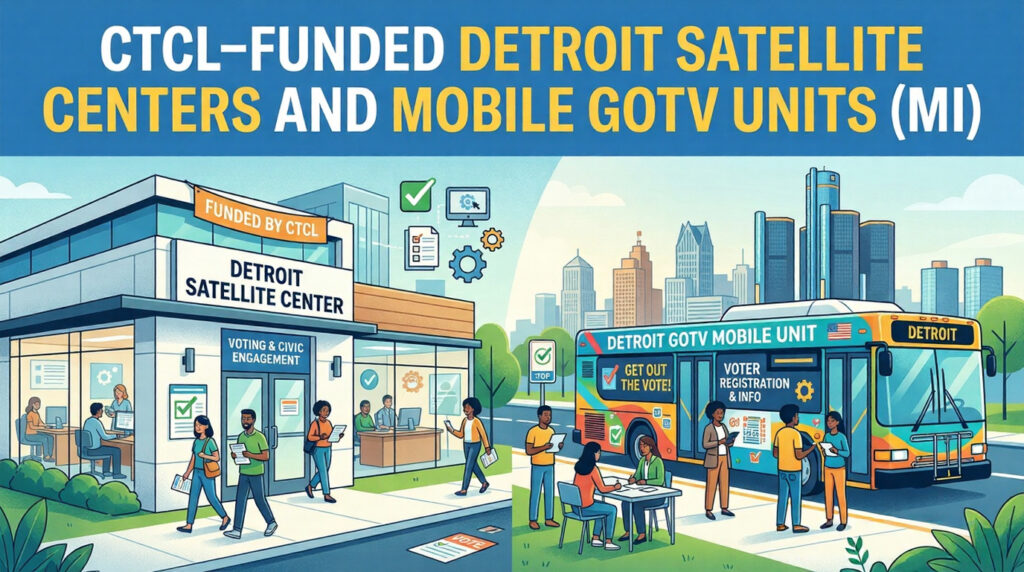
CTCL‑Funded Detroit Satellite Centers and Mobile GOTV Units (MI)

Established Fact Detroit accepted CTCL grants totaling between 3.5 and 7.4 million dollars, conditioned on adding 14 satellite voting centers, 30 drop boxes, and sharply increased poll‑worker pay; Muskegon received funds for a branded GOTV trailer. These privately designed deployments materially reshaped local election operations and access patterns in ways that boosted turnout in heavily

CTCL‑Funded Detroit Satellite Centers and Mobile GOTV Units (MI) Read More »

CTCL‑Conditioned Drop‑Box and Poll‑Worker Deployment (GA)

Reasonable Inference CTCL grant agreements with Georgia counties including Fulton and DeKalb funded the deployment of additional early-vote sites and enhanced staffing, with funding heavily favoring urban Democratic strongholds. In Georgia, over 94 percent of CTCL’s $45 million in grants went to 17 counties won by Biden, while less than 6 percent reached 26 counties

CTCL‑Conditioned Drop‑Box and Poll‑Worker Deployment (GA) Read More »

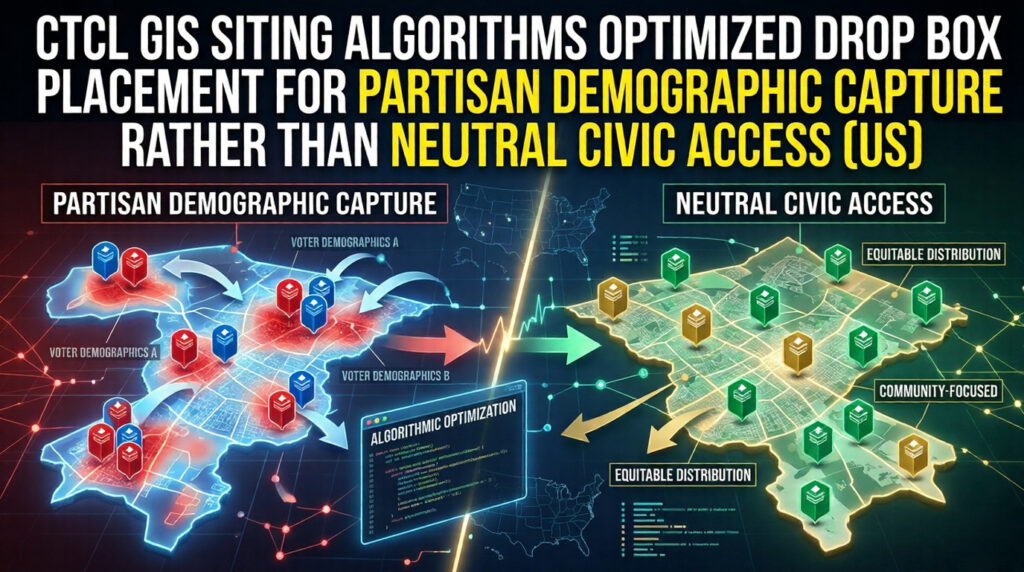
CTCL GIS Siting Algorithms Optimized Drop Box Placement for Partisan Demographic Capture Rather Than Neutral Civic Access (US)

Reasonable Inference CTCL and the Center for Civic Design (CCD) used internal GIS mapping and geolocation data to determine the physical placement of drop boxes. The documented result – extreme per-voter and per-square-mile disparities favoring Democratic urban precincts nationwide (e.g., 1 box per 4,000 voters in Delaware County, PA vs. 1 per 72,000 in Trump

CTCL GIS Siting Algorithms Optimized Drop Box Placement for Partisan Demographic Capture Rather Than Neutral Civic Access (US) Read More »

Private CTCL Operative Exercised Physical Control Over Election Night Ballot and Machine Environment, Including Drop Box Processing (WI)

Established Fact Michael Spitzer-Rubenstein, a Brooklyn-based CTCL “grant mentor,” gained physical control over Green Bay’s election night facility – including control of the secret Wi-Fi access point to which all ESS voting machines were connected. He wrote to the City Attorney at 9:29 PM on November 3, 2020, making a dispositive legal determination that late-arriving

Private CTCL Operative Exercised Physical Control Over Election Night Ballot and Machine Environment, Including Drop Box Processing (WI) Read More »

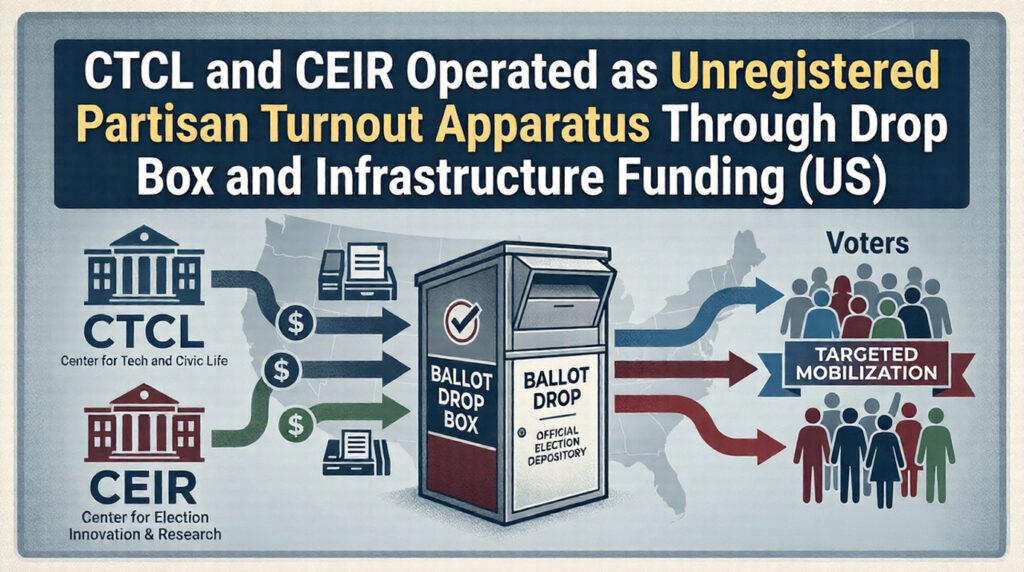
CTCL and CEIR Operated as Unregistered Partisan Turnout Apparatus Through Drop Box and Infrastructure Funding (US)

Established Fact The WILL Report found a statistically significant increase in Biden votes — estimated at more than 8,000 additional votes in Wisconsin alone — attributable to CTCL grants in the state. The OSC concluded that CTCL’s real motive was to “facilitate increased in-person and absentee voting” in targeted areas among voters fitting a “Biden

CTCL and CEIR Operated as Unregistered Partisan Turnout Apparatus Through Drop Box and Infrastructure Funding (US) Read More »

CTCL Grant Conditions Constituted Contractual Subordination of Public Officials to Private Directives; Facially Implicates Election Bribery Statute (WI)

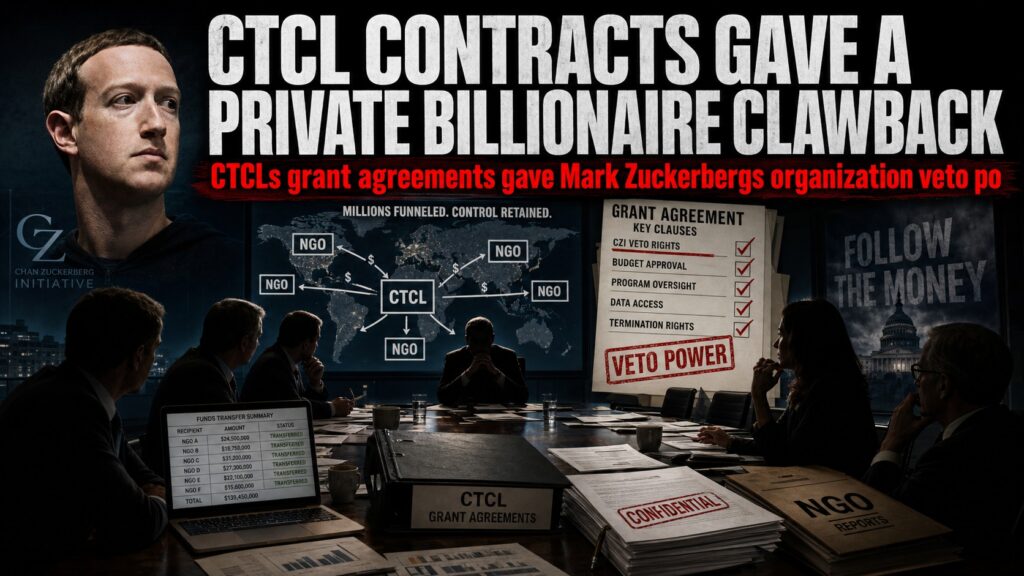
Established Fact CTCL’s grant conditions were enforceable contractual obligations with claw-back provisions. Cities were required to: (a) use funds exclusively per the WSVP; (b) maintain existing municipal budgets; (c) obtain CTCL’s approval before deviating from the WSVP’s planned expenditures; and (d) submit full compliance reports to CTCL by January 31, 2021. Kenosha, for example, was

CTCL Grant Conditions Constituted Contractual Subordination of Public Officials to Private Directives; Facially Implicates Election Bribery Statute (WI) Read More »

Per-Voter Grant Disparity Demonstrates Structural Bias Favoring Democratic Strongholds (WI)

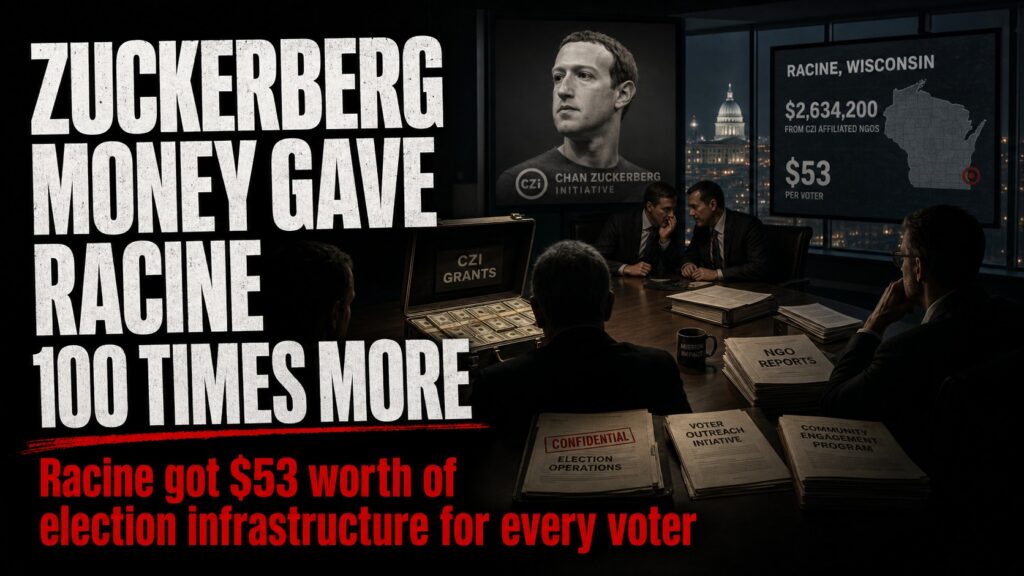
Established Fact A June 2021 analysis by the Wisconsin Institute for Law & Liberty (WILL) — based on open-records data from 196 municipalities — calculated CTCL funding per 2016 voter for each of Wisconsin’s ten largest cities. Among the five CTCL-targeted cities, Milwaukee received $13.82 per voter, Green Bay $36.00 per voter, and Racine $53.41

Per-Voter Grant Disparity Demonstrates Structural Bias Favoring Democratic Strongholds (WI) Read More »