United States

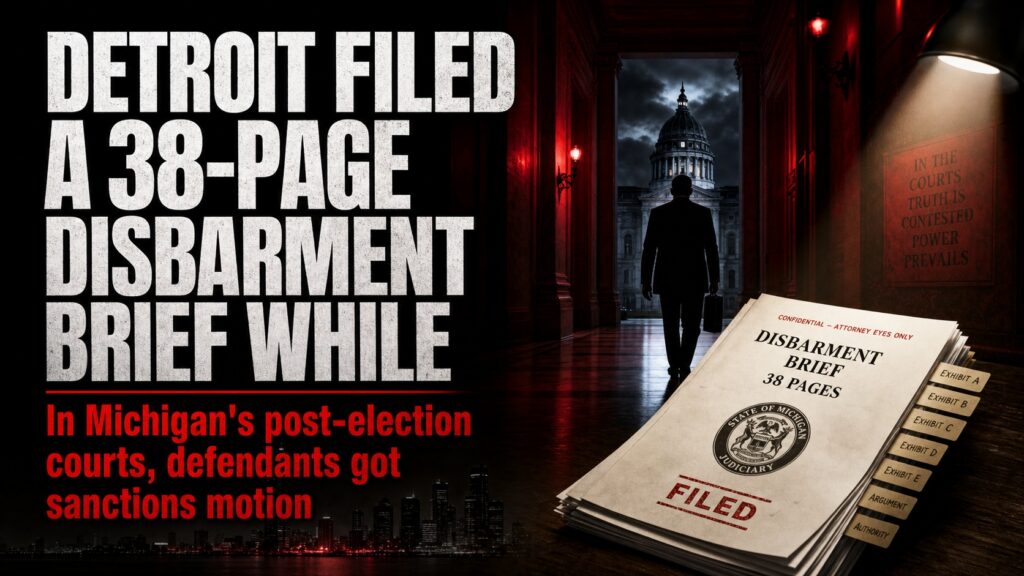
Disparate Pleading Standards and Punitive Page Limits in King v. Whitmer (MI)

Disputed Fact While plaintiffs faced extreme judicial hostility for technical pleading errors and affidavits deemed hearsay without the benefit of any discovery to prove them, the court accommodated defendants’ aggressive litigation tactics-allowing the City of Detroit to file a 38-page brief explicitly seeking sanctions and disbarment against plaintiffs’ attorneys, prioritizing punitive procedural action over evidentiary

Disparate Pleading Standards and Punitive Page Limits in King v. Whitmer (MI) Read More »
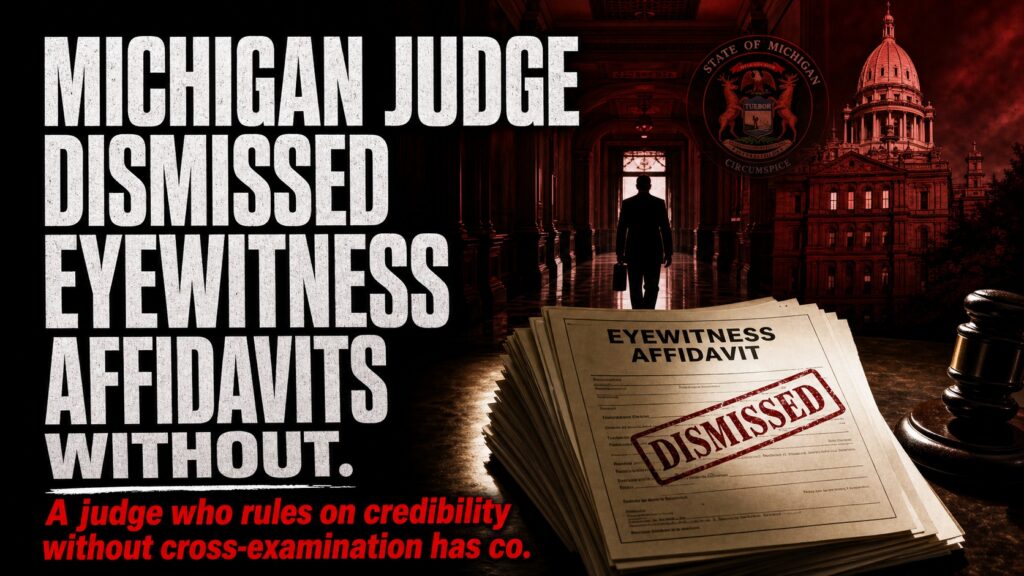
Credibility Determinations Without Cross-Examination in Costantino v. Detroit (MI)

Established Fact Wayne County Circuit Court Judge Timothy Kenny denied a preliminary injunction by making definitive credibility findings without an evidentiary hearing. He summarily dismissed sworn affidavits from multiple Republican poll challengers as “incorrect and not credible” while heavily crediting a single defense affidavit from Christopher Thomas, entirely bypassing the adversarial process of cross-examination. No

Credibility Determinations Without Cross-Examination in Costantino v. Detroit (MI) Read More »

Reversal of Discovery Authorization in Fulton County Ballot Inspection Case (GA)

Established Fact In Favorito et al. v. Wan et al. (Henry County Superior Court, Civil Action No. 2020CV343938), Judge Brian Amero on May 21, 2021 entered an order purporting to unseal approximately 147,000 Fulton County absentee ballots for forensic inspection. The unsealing, however, was expressly contingent on the court issuing a further order establishing protocols

Reversal of Discovery Authorization in Fulton County Ballot Inspection Case (GA) Read More »

Prevention of discovery limited access to information necessary to prove election fraud (US)

Disputed Fact Only 3 of the “64 lawsuits” featured any discovery that would provide plaintiffs with access to materials otherwise not available to the general public. Of those 3, only 1 (Bailey v Antrim County) offered any substantive discovery. Notably, in his oral opinion that closed the case, Judge Kevin Elsenheimer specifically stated: “By deciding

Prevention of discovery limited access to information necessary to prove election fraud (US) Read More »

Severe Sampling Limitations in Ward v. Jackson (AZ)

Established Fact The state court restricted forensic document examiners to reviewing only 100 randomly selected mail-in ballots for signature comparisons and evaluated only 1,626 duplicated ballots. The court concluded errors were statistically negligible and dismissed the case, preventing a statistically significant or comprehensive forensic audit of Maricopa County ballots. The arbitrarily narrow discovery perimeter precluded

Severe Sampling Limitations in Ward v. Jackson (AZ) Read More »

Deliberate Destruction of Records – Favorito v. Cooney (Fulton Co. Super. Ct.) – One of Three Discovery Cases; Access to Ballots Controlled by Same Officials Who Destroyed Records (GA)

Reasonable Inference [Reasonable Inference – Prior record destruction compromised the discovery process] Favorito v. Cooney was one of only three post-2020 election cases, nationally, in which some form of discovery was permitted. However, the discovery was supervised and channeled through the same Fulton County officials who, per the EOG Report, had already admitted destroying the

Deliberate Destruction of Records – Favorito v. Cooney (Fulton Co. Super. Ct.) – One of Three Discovery Cases; Access to Ballots Controlled by Same Officials Who Destroyed Records (GA) Read More »

Favorito v. Cooney (Fulton Co. Super. Ct.) – One of Three Discovery Cases; Access to Ballots Controlled by Same Officials Who Destroyed Records (GA)

Established Fact Favorito v. Cooney, No. 2020CV343938 (Fulton Cty. Super. Ct.), was among the few post-2020 election challenge cases in which a court authorized physical access to actual election materials: on May 21, 2021, Chief Judge Brian Amero (by designation) granted petitioners’ motion to unseal and inspect and scan the November 3, 2020 general election

Favorito v. Cooney (Fulton Co. Super. Ct.) – One of Three Discovery Cases; Access to Ballots Controlled by Same Officials Who Destroyed Records (GA) Read More »

Attorney Sanctions Used to Deter Election Integrity Litigation in Pennsylvania (PA)

Disputed Fact Following the 2020 election, attorneys who pursued election-challenge litigation in Pennsylvania and other states faced sanctions motions and bar discipline that created documented deterrent effects on future filings. The Rule 11 safe-harbor provision — which permits withdrawal within 21 days of a sanctions motion to avoid liability — provides a structural mechanism under

Attorney Sanctions Used to Deter Election Integrity Litigation in Pennsylvania (PA) Read More »

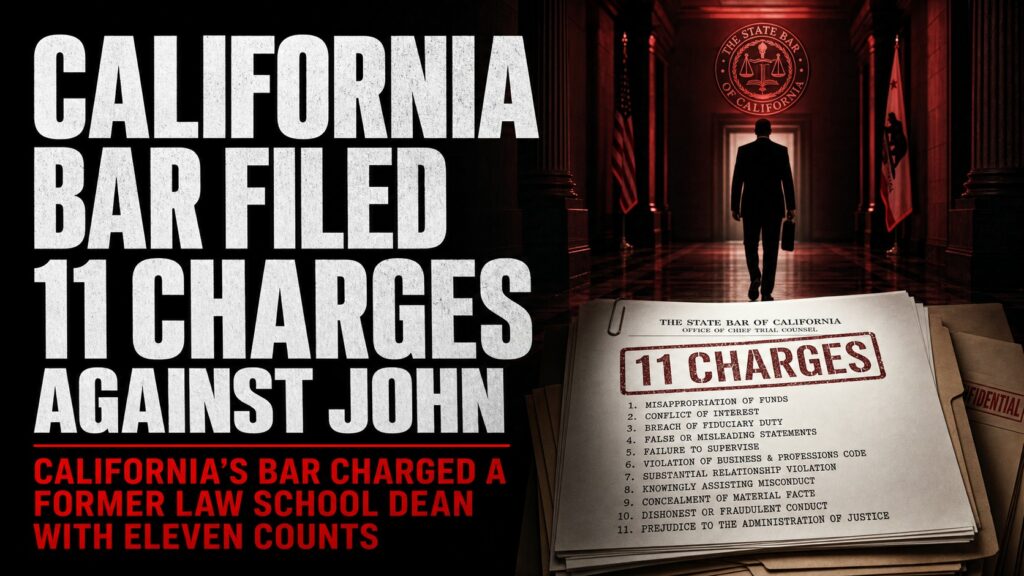
Attorney Sanctions Used to Deter Election Integrity Litigation in California (CA)

Disputed Fact John Eastman — a former law school dean, constitutional scholar, and attorney for Donald Trump — has been the subject of California State Bar disciplinary proceedings arising from his role in the effort to challenge the 2020 presidential election results. On January 26, 2023, the California Bar filed a Notice of Disciplinary Charges

Attorney Sanctions Used to Deter Election Integrity Litigation in California (CA) Read More »

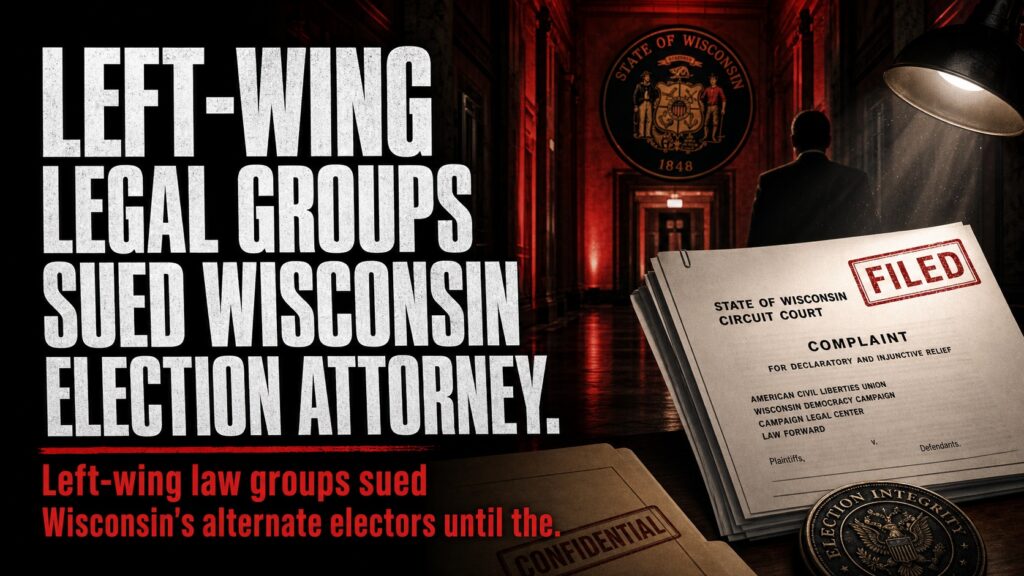
Attorney Threats Used to Deter Election Integrity Litigation in Wisconsin (WI)

Established Fact Law Forward and Georgetown University’s Institute for Constitutional Advocacy and Protection (ICAP) pursued civil litigation against Wisconsin’s ten alternate electors and the two Trump campaign attorneys who organized the elector strategy — James Troupis and Kenneth Chesebro — in Penebaker et al. v. Hitt et al., No. 22CV1178 (Dane Cty. Cir. Ct.), filed

Attorney Threats Used to Deter Election Integrity Litigation in Wisconsin (WI) Read More »